"Quilted Arctic"
A Tapestry of Fragility, Memory, and Change
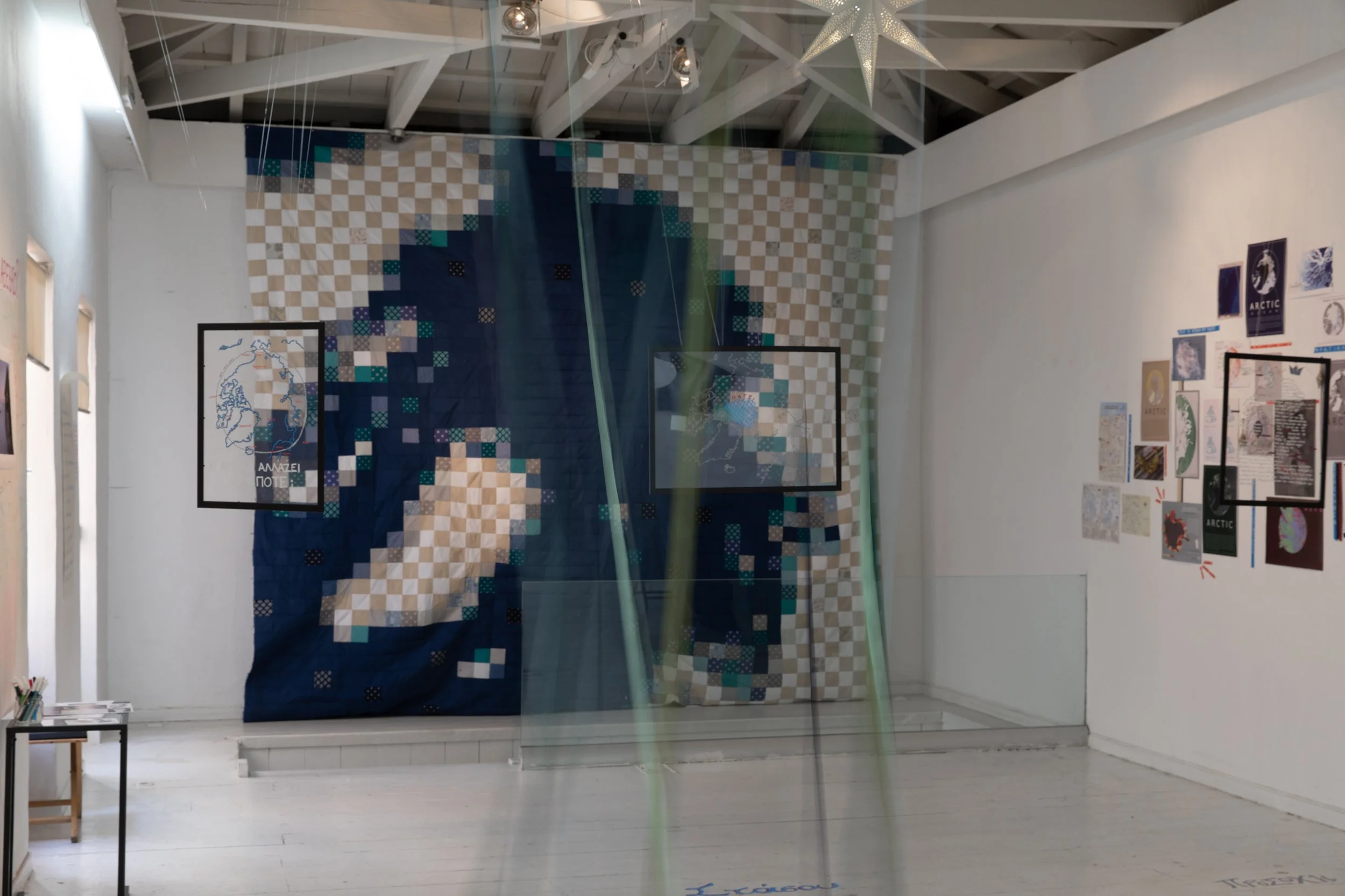
The Arctic is often spoken of as if it were far away from us—an elsewhere of ice and wind, a quiet threshold at the top of the world. Yet each time I work with its data, its stories, its distorted satellite traces, I feel its nearness. The Arctic breathes in our decisions; it remembers our emissions; it holds the pulse of the planet in its shifting ice. My Arctic Quilt emerged from this quiet, persistent pull. It is a landscape stitched from fragments—a textile map born out of uncertainty, longing, and the delicate labour of trying to understand a place that keeps changing faster than we can measure.
Remote sensing in the Arctic is like trying to see through breathing glass. Storms, darkness, drifting ice, and political borders blur the edges of what seems knowable. Fieldwork carries its own entanglements: weather that breaks plans, logistics that break budgets, and ethical questions that linger long after the data is collected.
Society tends to prefer simplicity—melting icebergs, isolated polar bears, a singular warning repeated in headlines. But the Arctic refuses to be simple. Climate change here does not unfold like a line; it moves like water, like wind, like stories carried across generations.
The quilt became my way to resist oversimplification—a reminder that:
Knowledge is always stitched from gaps,
Climate change is not a uniform blanket but a patchwork of uneven impacts,
And the Arctic is not empty space but a living archive of people, histories, and weather.
In making the quilt, I wanted to counter our collective shortsightedness.
To say, gently but firmly: look closer; the North is speaking.
The Process
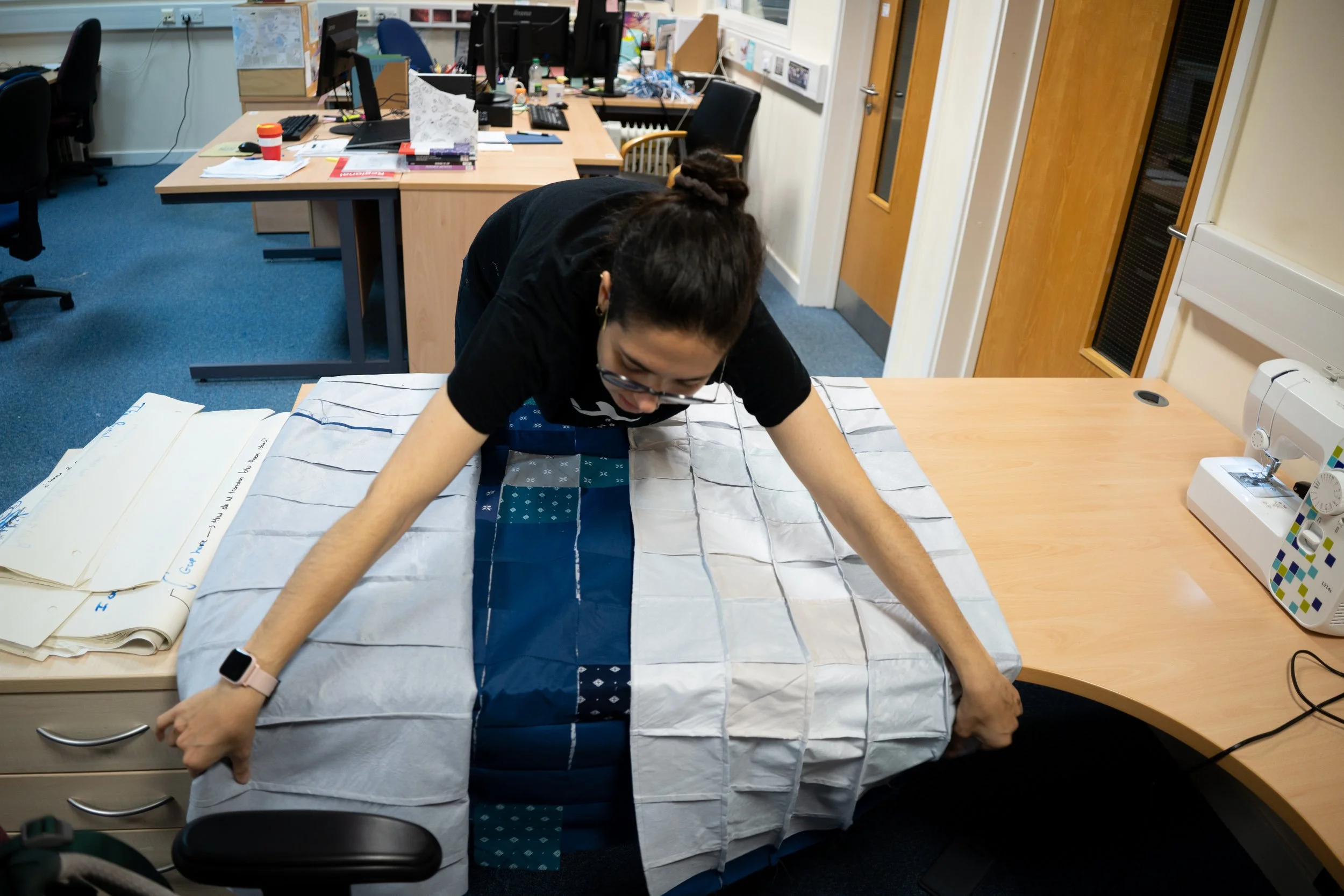
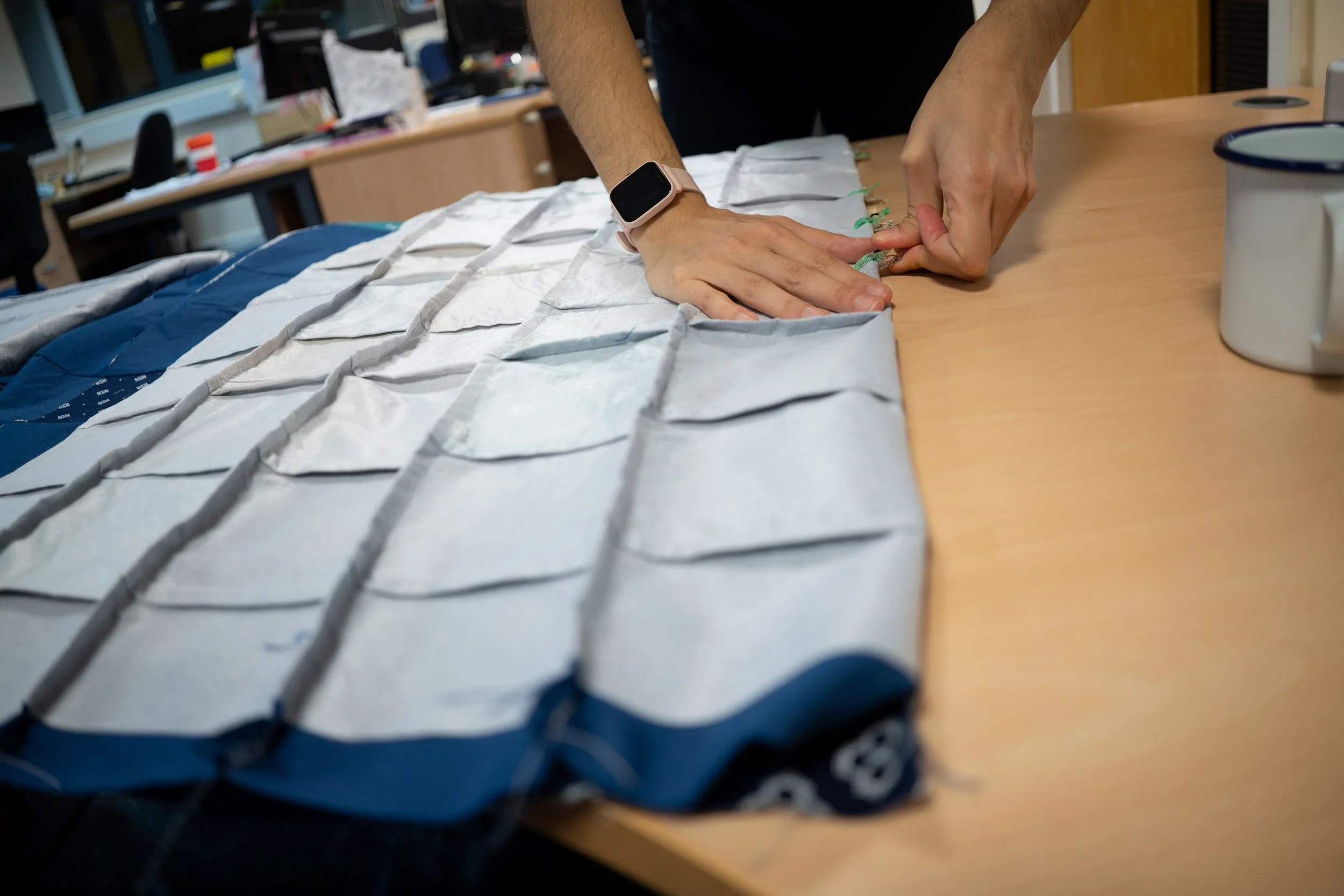
Creating the Arctic Quilt felt like preparing for a long journey. Slow, deliberate, full of unexpected turns. Sea ice concentration maps, pixelated satellite swaths, wind anomalies, old expedition routes—they formed the first thoughts and drafts. Many of these maps contained absence: blank patches where clouds hung heavy or winter swallowed the light. I kept these absences intact. They hold their own kind of truth.
Transforming Maps into Fabric
Fabric offers something the digital cannot: warmth, tactility, vulnerability.
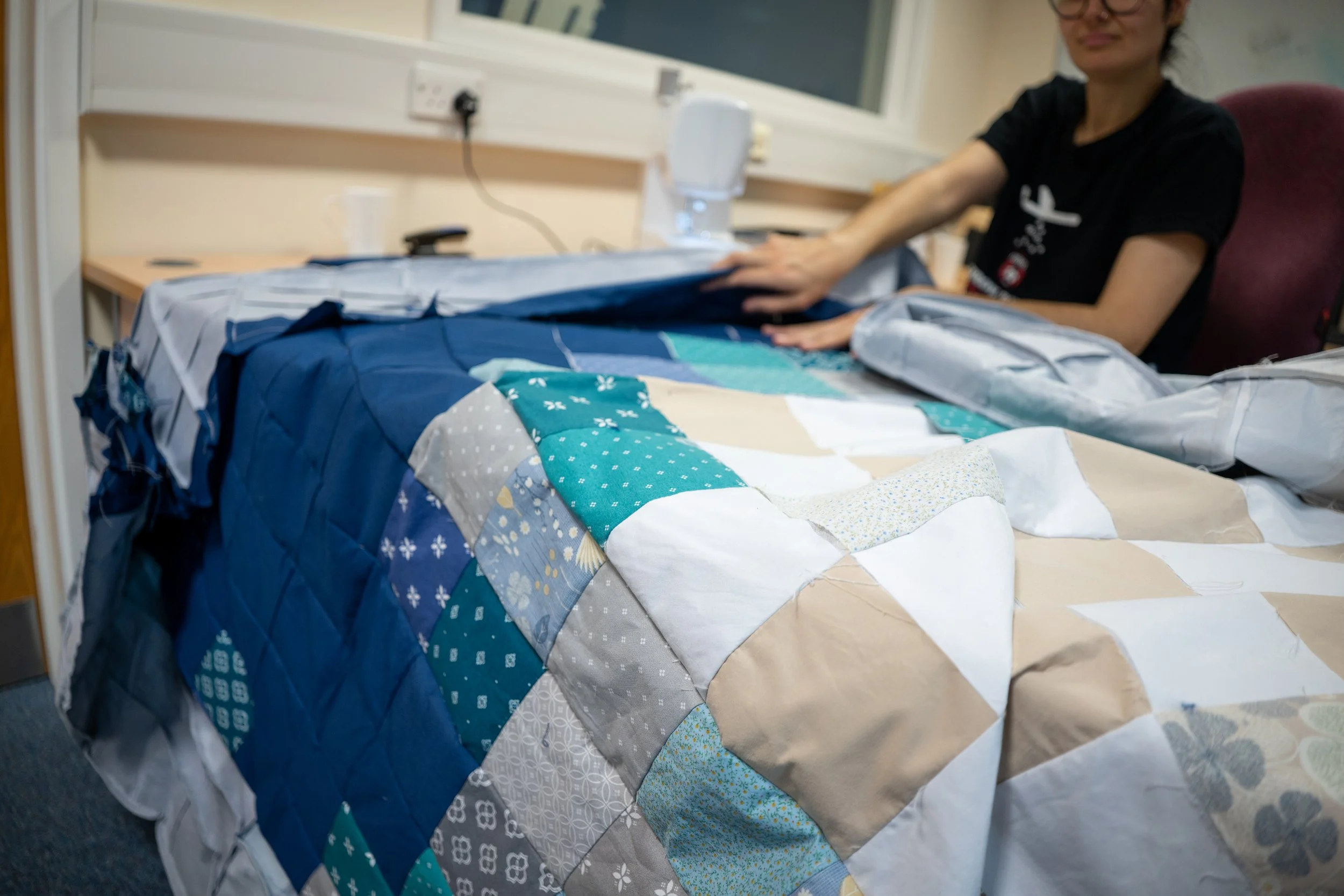
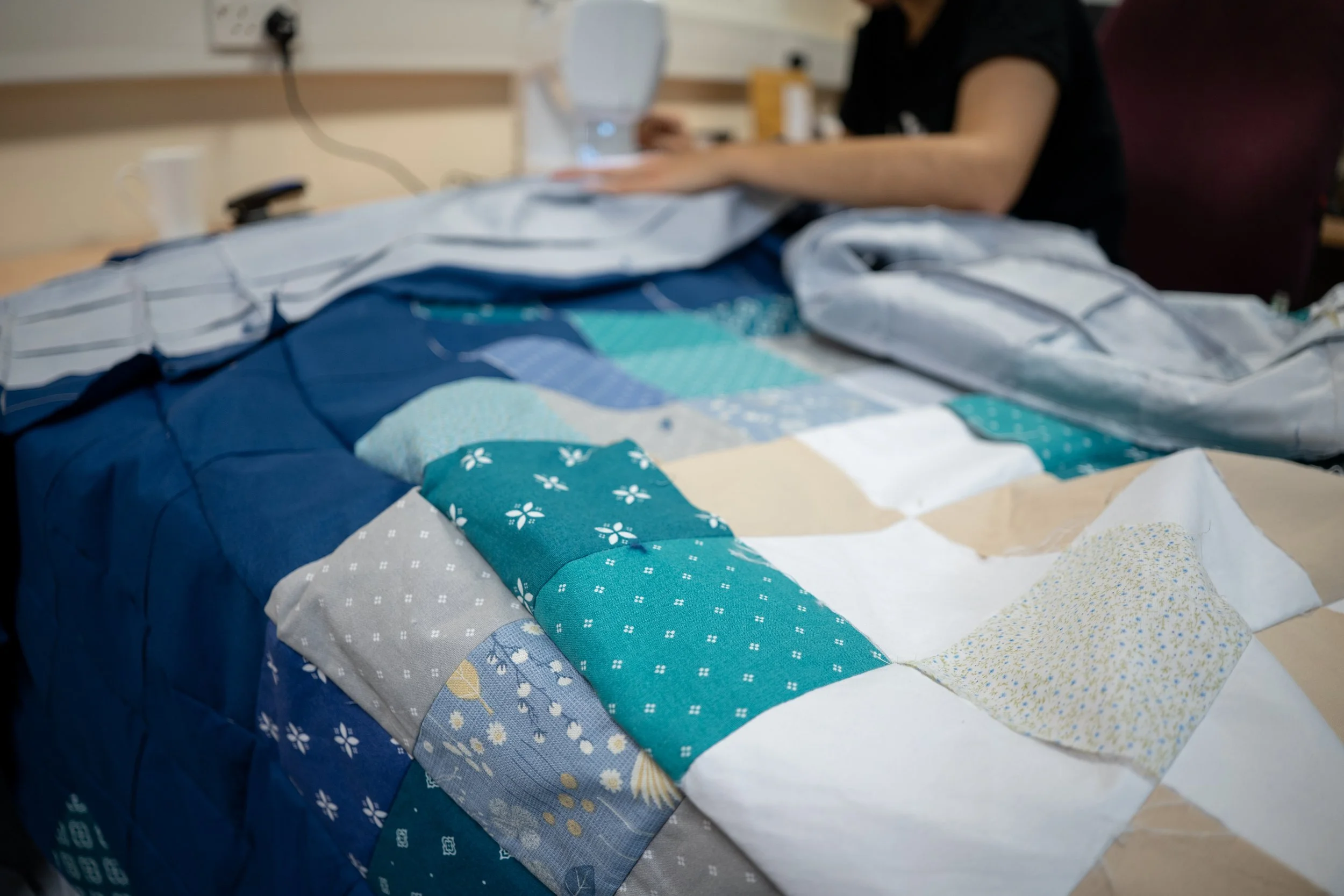
I translated sensor glitches into embroidered blocks; melt gradients into dyed cloth; river lines into wandering stitches. Some edges are frayed, like eroding shorelines. Some threads pull taut, mimicking the tension of a thawing world.
Assembling the Fragments
As I pieced the quilt together, the narrative slowly surfaced. Scientific layers sat beside cultural echoes; historical traces brushed against contemporary anxieties.
Some panels resisted alignment—they leaned, clashed, slipped. I left them that way. Their friction mirrors the discord between satellite vision and lived experience, between what we measure and what northern communities feel unfolding under their feet.
The final stitches were made by hand, one by one, in a rhythm that felt like breathing.
A slow craft for a slow violence.
The Quilt
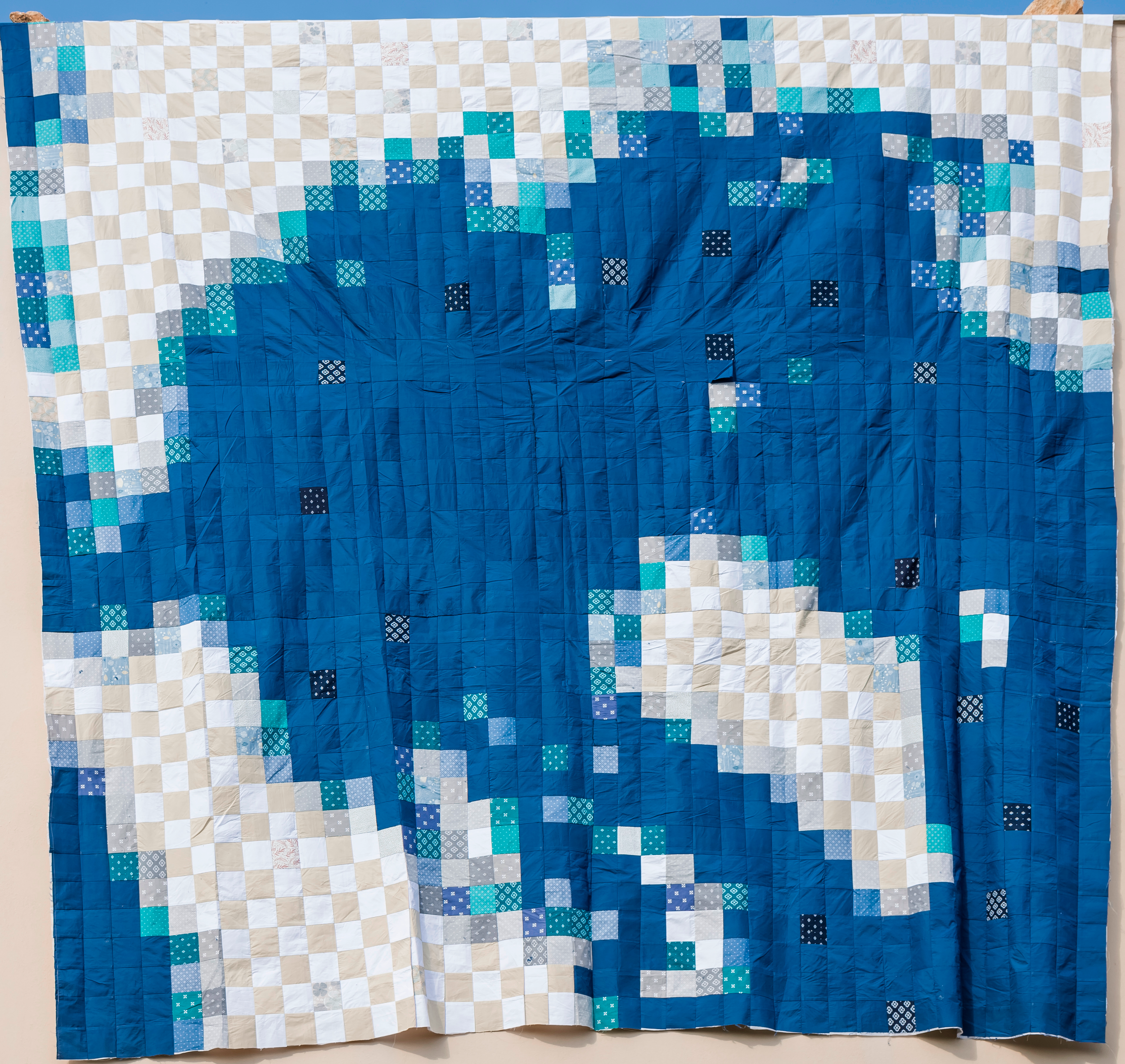
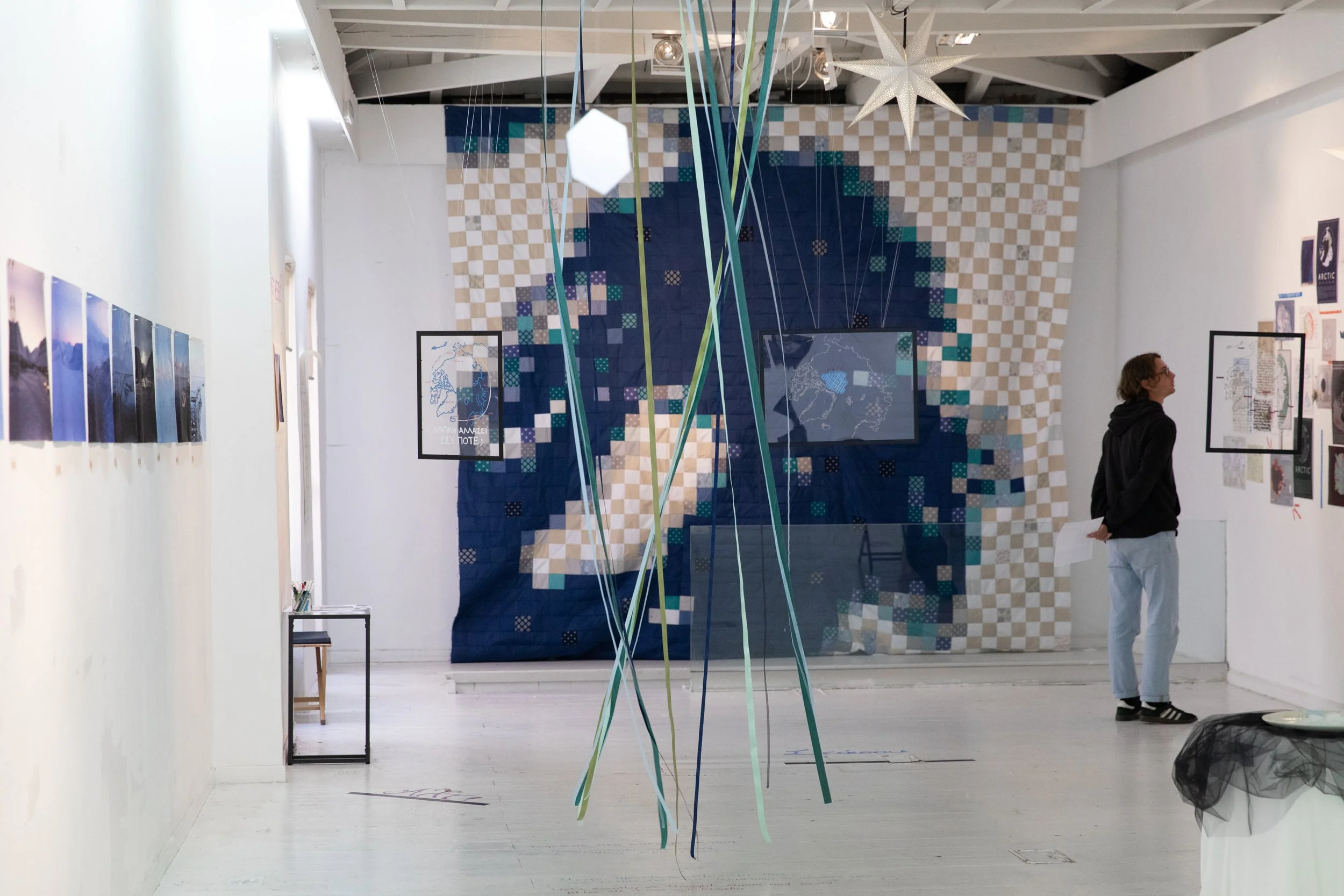
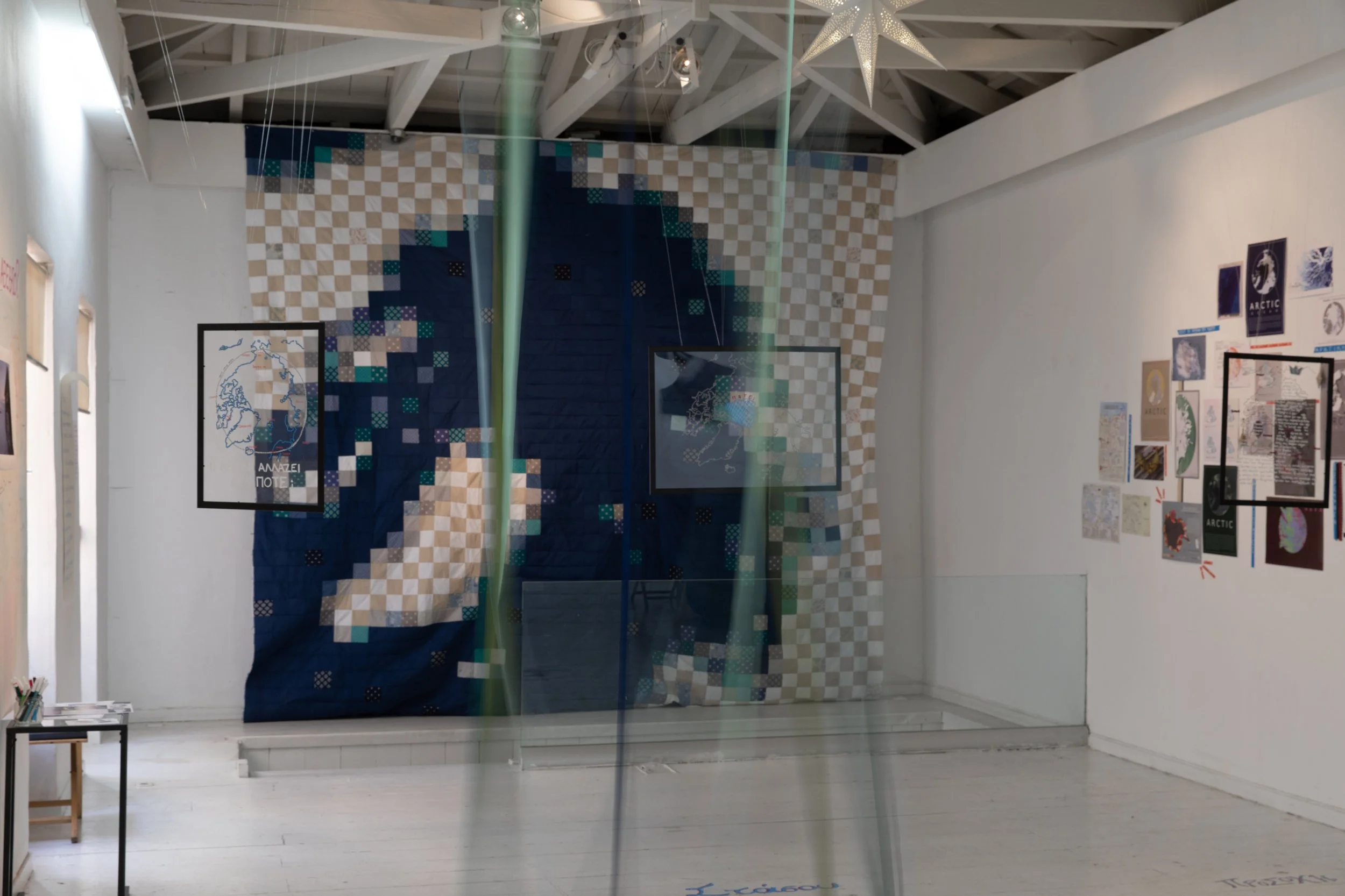
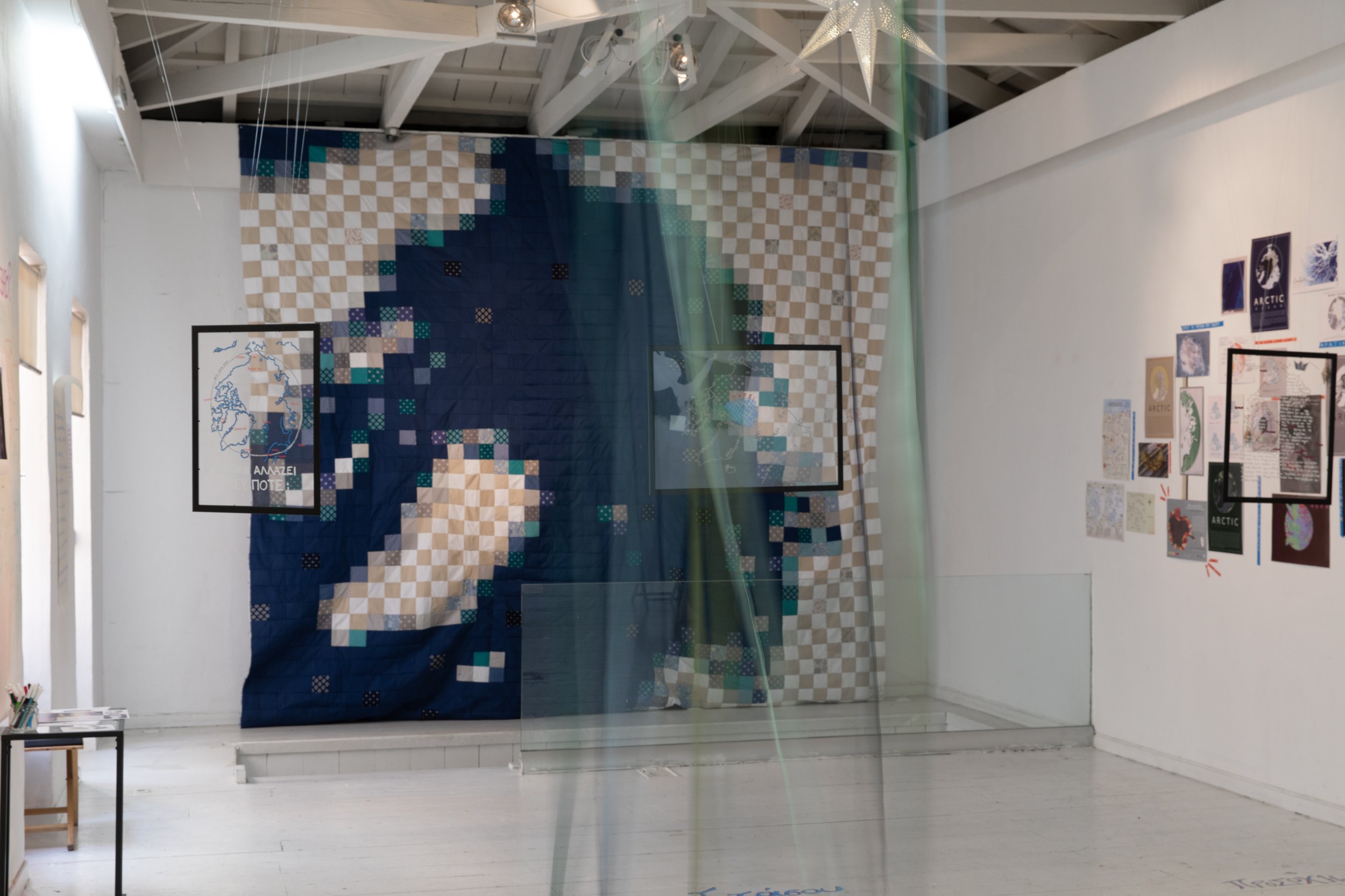
The Arctic Quilt stretches like a frozen horizon. Squares that look pixelated, as if pulled directly from low-resolution satellite scenes. Its surface is uneven, shifting between smooth cotton and rough linen. When touched, it feels unstable, like ice underfoot in late spring.
Under the clouded eye of a satellite
the Arctic inhales—
a slow, patient breath
that slips between pixels
and fractures the neat geometry
of what we think we know.
Snow remembers
what instruments forget.
Ice keeps stories
that no dataset will hold.
Winds braid timelines together—
past, present, thawing futures—
and lay them gently
at the edge of our maps.
I stitch these fragments
because nothing here is whole.
Because knowledge comes undone
in the very moment
we claim it is complete.
Because distance is an illusion
and every melted thread
tugs at the hem
of our own lives.
The Quilt rises under my hands,
a patchwork of warning
and wonder—
a soft geography
for a hardening world.
And if you press your ear
to its uneven surface,
you may hear it:
a whisper of ice,
a pulse of water,
a quiet plea
to look closer—
to listen longer—
to feel the North
before it is unstitched
from our future.
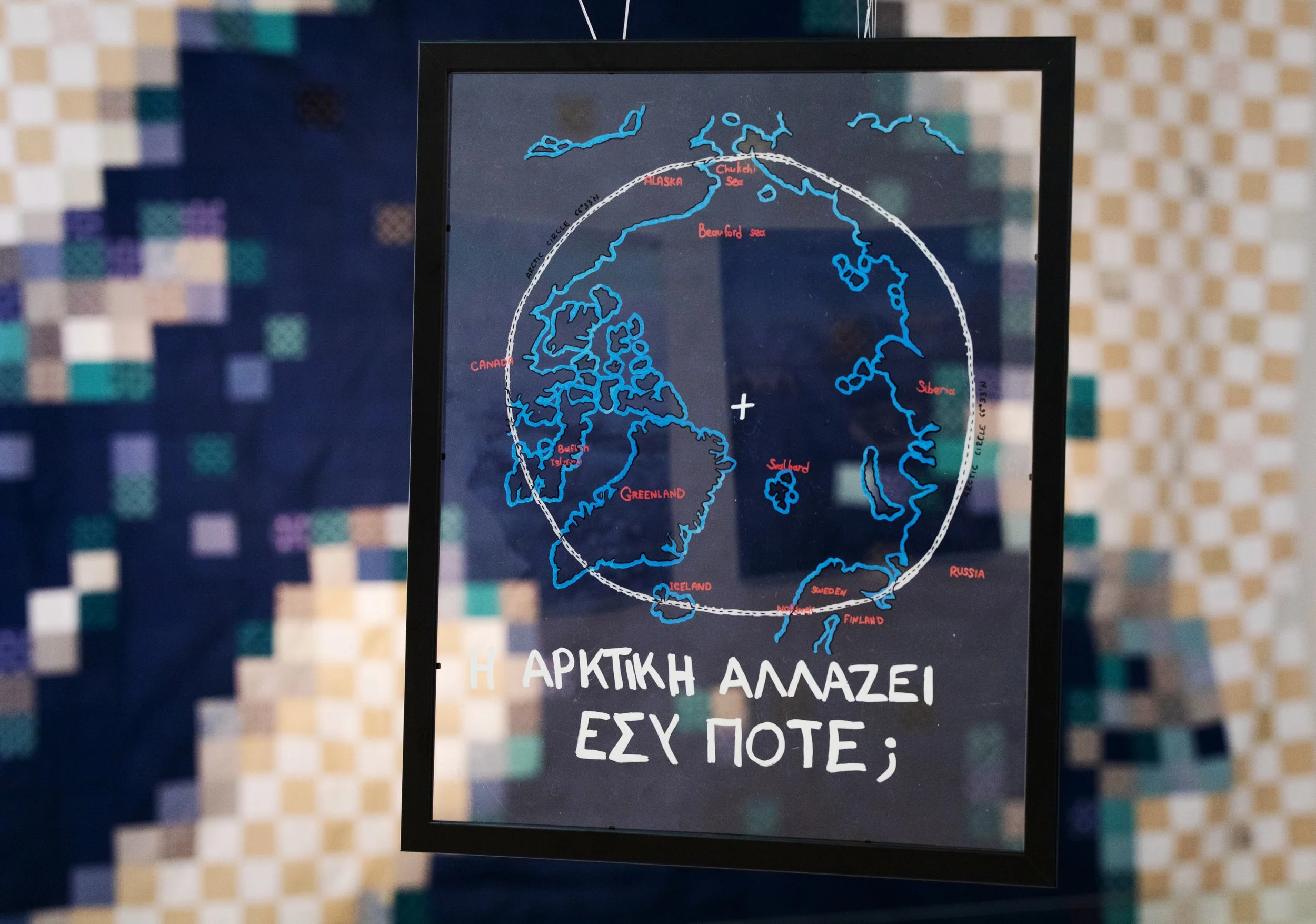
The Arctic is changing; when will you?